
English| EUR
Suggested for you
More currencies
Choose a language
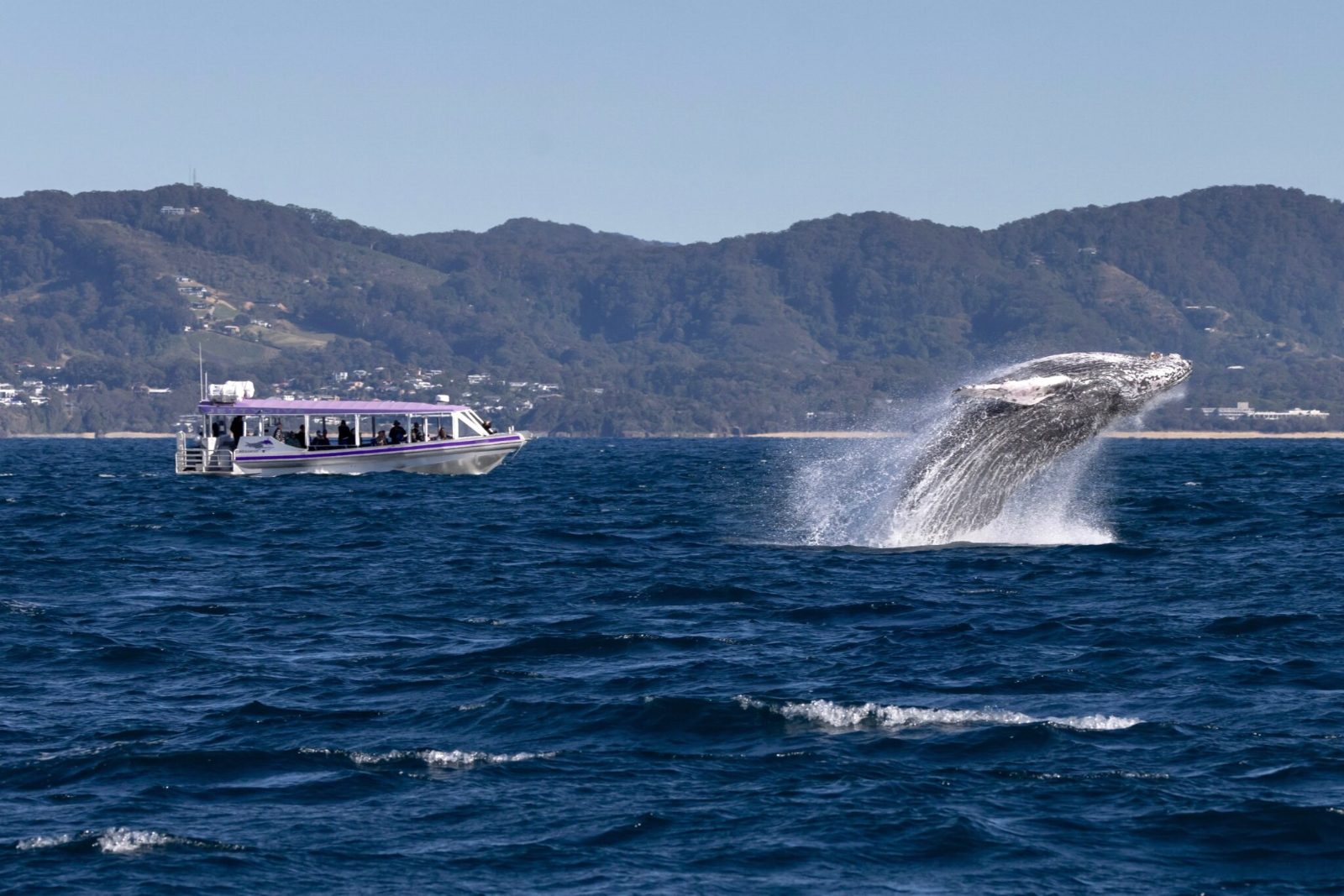
Humpback whales pass Coffs Harbour twice each year during their 10,000-kilometre migration between Antarctic feeding grounds and tropical breeding waters. The northbound and southbound legs create two distinct viewing windows, each offering different whale behaviours and sea conditions.
Quick answer
The coffs harbour whale watching season runs from mid-May through early November, tracking the humpback migration along the New South Wales coast. Northbound whales pass between May and August, while the southbound journey with calves occurs September through November. Peak activity falls in June-July and September-October when pod numbers are highest and tour operators run daily departures from Coffs Harbour International Marina.
More than 35,000 humpback whales transit the waters off Coffs Harbour each year, making the mid-north coast one of the most reliable viewing corridors in the Southern Hemisphere. The migration follows the continental shelf approximately 30 kilometres offshore, placing the harbour within easy reach of chartered vessels. The coffs harbour whale watching season divides into two phases shaped by reproductive timing. Northbound whales travel quickly in May through August, moving toward calving grounds in the Coral Sea and bypassing feeding opportunities. These adults maintain steady speeds and surface less frequently, though breaching and tail-slapping remain common as males compete for position. Southbound pods between September and November move more slowly, with newborn calves requiring frequent rest stops and nursing intervals. Mothers with young approach closer to shore, seeking sheltered bays and warmer shallows that improve visibility for tour groups. Water temperature and plankton blooms influence exact timing each year. Warmer winters can shift the northbound peak forward by 7 to 10 days, while late-season storms in October sometimes push stragglers into mid-November. Tour operators at the marina monitor satellite tracking data and coordinate sighting reports along the coast, adjusting departure times to match real-time movements. Morning departures between 8:00 AM and 10:00 AM align with calmer wind conditions and improved surface clarity, particularly during the southbound window when cow-calf pairs rest in predictable zones. Booking windows tighten as the season progresses. June and September see the highest demand, with weekend tours often filled two weeks ahead. Midweek departures offer more availability and smaller group sizes, though migration density remains consistent regardless of tour day. Operators sail daily throughout the season, weather permitting, with the marina accessible year-round and vessel schedules published 90 days in advance.
“More than 35,000 humpback whales transit the waters off Coffs Harbour each year, making the mid-north coast one of the most reliable viewing corridors in the Southern Hemisphere.”
The humpback whale migration season in Coffs Harbour typically spans from June to November, with the peak viewing window occurring between July and September. Planning your arrival within the best arrival window of 08:00–16:00 is recommended, as morning tours generally offer calmer sea conditions for whale sightings.
Cooler sea temperatures; 15°C–19°C
Early migration period sees whales heading north to warmer waters. Sightings are consistent as the population begins to build.
Increasing warmth; 18°C–23°C
Whales migrate south toward Antarctica with calves. This period often provides opportunities to observe mother-calf interactions.
—
Arriving during the best arrival window of 08:00–16:00 ensures access to morning tours. Calmer waters during these hours typically improve visibility and passenger comfort.
Verdict: For the highest probability of sightings and calmest seas, visit during the peak months of July through September and prioritize the 08:00 arrival window.
The booking office for whale watching tours operates daily to assist with inquiries and scheduling. Our team is available throughout the week to help coordinate your visit.
Entry to the Coffs Harbour International Marina is free, allowing visitors to walk the grounds and access the harbour area at no cost. Whale watching excursions are separate services that require a paid booking.
Verdict: There is no entrance fee to the marina, though whale watching tours require a paid booking which varies by provider.
Whale watching departures are located at the Coffs Harbour International Marina, situated along Marina Drive. The marina is accessible by vehicle, public transport, or on foot from the nearby Coffs Harbour Jetty area.
Follow the Pacific Highway (A1) and turn onto Vernon Street, then proceed to Marina Drive.
Take local Bus Route 392 to the Coffs Harbour Jetty stop.
Walk from the Coffs Harbour Jetty precinct along Marina Drive.
Direct service to the Coffs Harbour International Marina drop-off point.
For the best experience, plan your arrival within the best arrival window of 08:00–16:00, as morning tours generally offer calmer sea conditions for whale sightings.
A few essentials will ensure you're ready for your whale watching excursion from Coffs Harbour International Marina.
Everything you need to know about coffs harbour whale watching season
The coffs harbour whale watching season typically aligns with the annual humpback migration along the New South Wales coast. Visitors generally find the most activity during the colder months when these marine mammals travel through regional waters. Tours are highly dependent on ocean conditions and wildlife migration patterns. Always check current local marine forecasts to plan your trip effectively.
Most boat tours departing from the harbour area follow a standard duration to maximize sighting opportunities while maintaining passenger comfort. These marine adventures usually last a few hours, depending on the specific vessel and weather conditions on the day. Operators prioritize finding pods while ensuring minimal disruption to the animals.
There is 0 AUD for entry to the harbour, meaning public access to the marina precinct is free of charge. However, specific whale watching tours require a paid booking to secure a place on a vessel. You should coordinate your visit with the official site to ensure availability.
Families often enjoy the coffs harbour whale watching season as it provides a unique educational experience regarding local marine biology. Parents should consider sea conditions and the duration of the trip to ensure comfort for younger children. It is recommended to contact operators regarding specific age requirements or safety guidelines for their tours.
The best arrival window is 08:00–16:00, as morning tours generally offer calmer sea conditions for whale sightings. Heading out earlier in the day often reduces the chance of afternoon swells. This scheduling helps ensure a smoother journey for all passengers on the water.
While you can explore the marina freely, securing a spot for a boat trip requires a paid booking. Because the coffs harbour whale watching season attracts many visitors, it is advisable to organize your reservation ahead of your arrival. You can find necessary logistics and information on the official site.